
We are now more than a year into the COVID-19 crisis, and while vaccines are rolling out, the psychological “second wave” is just beginning to peak. In 2021, the battle isn’t just against a respiratory virus; it is against a global surge in anxiety, depression, and burnout.
Recent data from the CDC is staggering: the number of people reporting symptoms of anxiety or depressive disorders jumped from 36.4% to 41.5% between August 2020 and February 2021. As we move through this year, health experts are warning that the mental health “disease burden”—already 13% of the world’s total—could leave a more permanent scar than the virus
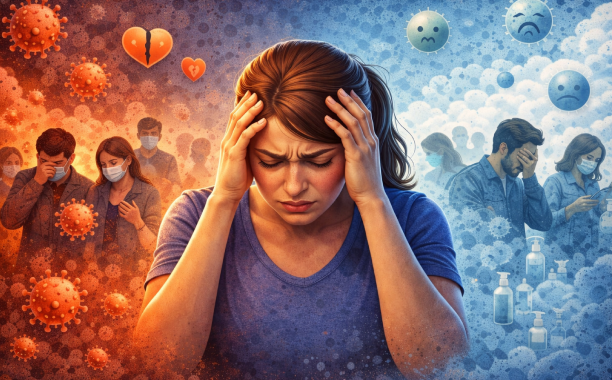
The Anatomy of Pandemic Stress
The trauma of the past 12 months is multi-layered. For many, it isn’t just the fear of the virus, but the “collateral damage” of the response:
- The Quarantine Toll: Prolonged social distancing has led to an increase in alcohol abuse, anger, and insomnia. For children and teens, the “void” created by school closures and lack of physical play has resulted in worsening behavioral responses and a heavy reliance on screens.
- The “COVID Fog”: For survivors, the battle doesn’t end with a negative test. Post-COVID syndrome, often called “Long COVID,” brings physical exhaustion and “brain fog” that exacerbates anxiety and depression.
- Frontline Trauma: Healthcare workers have faced the “wrath” of the pandemic. An MHA survey found that 93% of healthcare workers are experiencing high levels of stress, while 76% report total burnout. Constant exposure to high death rates and the isolation from their own families have created a crisis within the medical community.
Work in 2021: From Job Loss to “Zoom Fatigue”
The economic contraction has hit mental well-being from two sides:
1. The Unemployment Crisis
With unemployment rates peaking (reaching 8.6% in the USA in 2020), the loss of a job is about more than money—it is the loss of self-esteem, daily structure, and purpose. The “steep competition” for remaining roles in 2021 is keeping anxiety levels at an all-time high for the unemployed population.
2. Virtual Meeting Burnout
For those still working, the shift to remote work has introduced a new phenomenon: “Virtual Meeting Burnout.” The constant self-evaluation on camera increases cognitive workload. Ironically, while we are more “connected” via video calls, employees report feeling more disconnected and isolated than ever.
The Digital Shift: The Rise of Online Psychotherapy
Perhaps the most positive trend of 2021 is the explosion of Teletherapy. Searches for online counseling have spiked by 124% as people look for safe, accessible ways to talk.
- Breaking Barriers: Online counseling removes the logistics of travel and allows those in rural areas or with physical disabilities to seek help.
- Proven Results: Studies show that message-based therapy can lead to a 50% reduction in depressive symptoms over four months.
- Cost-Effectiveness: Digital platforms are making mental health care more affordable than traditional in-person sessions, which is crucial given the current economic climate.
Breaking the Stigma
In 2021, the “shame” of mental health is finally starting to fade. From celebrities sharing their struggles to the tripling of funding for mental health startups, the conversation is becoming mainstream. However, we still have a long way to go:
- 93% of countries saw their mental health services disrupted by COVID-19.
- Most nations still spend less than 2% of their health budgets on mental well-being.
- 75% of people in some regions still avoid treatment due to fear of embarrassment.
Conclusion
The “Long COVID” of mental health requires a global investment. As we rebuild our economies and healthcare systems, we must treat the mind with the same urgency as the body. Normalizing the conversation and embracing digital therapy are our best tools to ensure that the “new normal” is a healthier one for everyone.