
Reading time: 09 minutes
Team PSP | 07/04/2026
On March 1, 2026, the world woke up to a long-feared geopolitical nightmare. Coordinated US-Israeli strikes on Iran’s nuclear and military sites triggered a massive global economic shock. With the Strait of Hormuz effectively shut down, oil prices shot past $100 per barrel instantly, and global stock markets plummeted.
This isn’t a standard energy crisis. Our modern, hyper-connected economy means this conflict is hitting supply chains in ways most experts failed to predict. From semiconductor manufacturing to global food supplies, the disruption is systemic. A drone strike in the Gulf now directly causes construction delays in Toronto and rising grocery costs in Mumbai, proving that “regional” conflicts no longer exist in a globalized world.
A Decades-Long Build-up
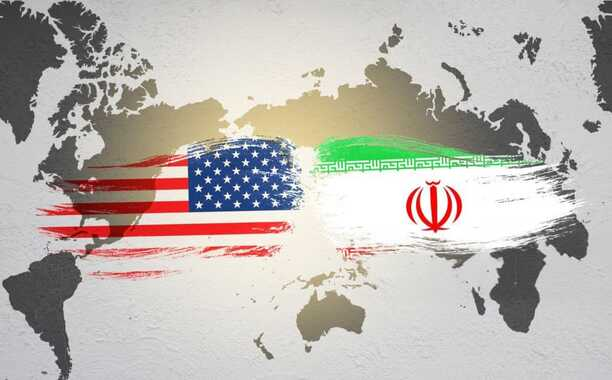
The crisis stems from fifty years of friction following the 1979 Islamic Revolution. After years of sanctions and the collapse of the 2015 nuclear deal, tensions hit a breaking point when Donald Trump returned to office in 2025. Following a brief 12-day clash mid-year, a massive US-Israeli air campaign on February 28, 2026, pushed the region into open war, leading to Tehran’s blockade of the Persian Gulf.
The Strategic Importance of Hormuz
The 33-mile-wide Strait of Hormuz is the world’s most vital economic chokepoint, handling 20% of global oil and LNG. With the passage now littered with mines and drone threats, insurance is impossible to get, and the flow of raw materials for plastics, chemicals, and fertilizers has been choked off.
A Multi-Industry Collapse
This war is dismantling just-in-time supply chains across every sector. The Strait serves as a vital link for everything from medicine to microchips. As assembly lines halt from Seoul to Silicon Valley, the global economy is becoming more expensive and volatile.
Aviation’s New Low
The airline industry is facing a crisis worse than the pandemic. Over 30,000 flights were cancelled in the first two weeks as Middle Eastern airspace closed. Major carriers like Emirates and Qatar Airways have seen operations freeze, while international flights between Europe and Asia face massive delays and soaring fuel surcharges. With jet fuel prices doubling and airline stocks tumbling, the projected “golden age” of aerospace has vanished. Even ground safety is gone; a drone strike near Dubai International proved that in this conflict, no civilian infrastructure is truly safe.
Shipping & Logistics: When the World’s Arteries Run Dry
If aviation is in turmoil, the maritime industry is suffering a total collapse. The blockade of the Strait of Hormuz has forced major shipping companies to either stop Gulf services or divert vessels around the Cape of Good Hope. This detour adds up to 15 days to travel times and over $1 million in extra costs per voyage—expenses that are being passed directly to consumers.
The insurance market has effectively abandoned the region. War risk premiums have jumped by 1,000%, and as of early March 2026, major insurers have pulled coverage for the Gulf entirely. Without insurance, ships cannot move. Logistics leaders like Maersk and DHL have introduced “conflict surcharges,” further driving up global shipping costs.
The fallout is hitting unexpected areas. Indonesian nickel producers, who get 75% of their sulfur from the Gulf, are facing shutdowns. Meanwhile, the industrial giants of China, Japan, and South Korea are struggling due to their heavy reliance on Gulf energy. From medicine to car parts, cargo is stuck, threatening to reignite global inflation.
Technology & Semiconductors: The Hidden Chokepoint
While the public focuses on oil, the tech world is panicked over helium. Qatar produces over a third of the world’s supply, and it is vital for cooling the equipment used to print silicon chips. With Qatar’s production facilities hit by drone strikes and the blockade in place, the global chip industry is facing a shortage with no alternative source.
Experts predict at least a three-month shutdown. With a quarter of the world’s helium trapped, the industry’s long-standing fears of a total manufacturing shock are coming true. Additionally, the supply of bromine—66% of which comes from Israel and Jordan—is under extreme pressure.
Market reactions have been brutal. Samsung and SK Hynix have lost a combined $200 billion in value, and semiconductor ETFs are sliding. The AI boom is also at risk; surging energy prices are making data centers—which are massive power consumers—far more expensive to run. Physical attacks on data centers in the UAE and Bahrain have proven that even the “cloud” is vulnerable to this war.
Agriculture & Food Security: The Fertilizer Shock
The Gulf nations are the backbone of the global fertilizer trade, controlling a massive share of the ammonia and urea markets. The closure of the Strait could slash global fertilizer supplies by a third. Because LNG is a key ingredient for nitrogen-based fertilizers, the energy blockade is creating a massive agricultural crisis.
Exporters like India, Brazil, and the US are highly vulnerable. While current crops might be safe, the next planting season is at risk. Without fertilizer, yields for staples like wheat and rice will drop, leading to global food scarcity. This is a slow-burning crisis that will be felt for years as high energy costs inflate every step of the food supply chain.
Pharmaceuticals & Healthcare: Shortages and Rising Costs
The pharmaceutical industry relies on fast, temperature-controlled logistics that have now been shattered. Many essential drug ingredients made in Asia rely on chemicals shipped through the Middle East. The blockade is cutting these ties.
Companies are now rushing to secure employees and supply chains in the region. While total shortages haven’t hit yet, rising freight and insurance costs mean drug prices will skyrocket. Countries like Nigeria are already warning of healthcare spikes. Hospitals worldwide are being told to move from “just-in-time” ordering to stockpiling critical meds as the cost of temperature-sensitive shipping climbs.
Financial Markets & Banking: From Crashes to Currency Crises
Markets reacted instantly to the conflict. On March 2, major US indices saw significant drops, but the pain was worse in energy-dependent markets. South Korea’s KOSPI crashed 12% in one day, and Pakistan’s market saw its largest decline in history.
Investors are moving to gold and the US dollar, which is crushing emerging market currencies. Bank of America has warned that the world is still underestimating the risks. In the banking sector, trade financing in the Gulf has become almost impossible because of the lack of insurance. With analysts now predicting negative growth for the US, the threat of a global recession is becoming a reality.
Construction & Real Estate: Rising Costs and Legal Deadlocks
The construction sector is already seeing major disruptions. Vital materials like steel, cement, aluminum, and concrete—often sourced from the Middle East—are being blocked as shipping lines avoid the Gulf. Logistics companies are adding “conflict surcharges,” which will eventually raise prices for developers and homeowners.
Projects relying on these imports are facing massive delays. Additionally, the jump in oil prices is making the production of cement and aluminum much more expensive. This has created a legal nightmare regarding “force majeure” clauses; while many contracts allow for delays during war, the lack of a formal US declaration of war is leading to intense court battles over whether these clauses actually apply. In the US, this timing is devastating for the spring homebuying season, as rising fuel and material costs eat into builder margins and hike home prices.
Tourism & Hospitality: A Massive Financial Hemorrhage
The Middle East’s position as a global travel hub is under attack. Estimates suggest the conflict is costing the regional tourism sector between $600 million and $800 million per day. Major transit hubs like Dubai and Doha have seen passenger numbers collapse. Oxford Economics predicts a decline of up to 27% in regional tourism for 2026. The drone strike near Dubai International Airport has shattered the image of the UAE as a safe destination, leading to cancelled cruises and empty hotels across the Arabian Gulf.
Defense & Cybersecurity: The Digital Front Line
While other sectors struggle, defense contractors like Lockheed Martin and Raytheon are seeing a surge in business. Production of high-tier weaponry is being quadrupled to replenish US stockpiles, which are running dangerously low.
The war is also being fought through cyberattacks. Iranian hackers are targeting US power grids and water systems, often supported by Russian groups. Even physical tech infrastructure is at risk; drone damage to Amazon data centers in the UAE and Bahrain has put the region’s massive data center boom in jeopardy. Analysts suggest this will force a global shift in IT spending toward cloud resilience and advanced cybersecurity.
What Comes Next: Three Scenarios for the Future
As the conflict enters its third week, PSP envisions three potential outcomes:
- Scenario A (Short Conflict): A ceasefire is reached within a month. Oil prices would stabilize around $80-90, though insurance costs and risk premiums would remain high.
- Scenario B (Prolonged Conflict): Hostilities last 3 to 6 months, causing global GDP to shrink by up to 1.5%. A full-blown chip shortage would hit due to helium outages, and many emerging markets would fall into recession.
- Scenario C (Wider Escalation): A permanent closure of the Strait of Hormuz or the spread of war to Saudi Arabia could trigger a global depression similar to the 2008 financial crisis. Regardless of the outcome, the era of prioritizing efficiency over resilience is over.
Conclusion: A Wake-Up Call for the Global Economy
The US-Iran War of 2026 has exposed the extreme fragility of our interconnected world. A 33-mile-wide waterway has acted as a master switch, cutting off the global flow of energy, food, and technology. This isn’t just about oil; it’s about the hidden dependencies in everything from microchips to fertilizer.
In the view of PSP, the resilience of global markets is being tested on a level not seen since the pandemic. The strongest companies will be those that diversify their supply chains and move away from concentrated geographic risks. The world has shifted, and business strategies must adapt immediately.
Frequently Asked Questions (FAQs)
Q1. How has the conflict impacted global oil and energy prices?
Immediately following the start of hostilities on February 28, 2026, Brent crude prices surged from $70 to over $110 per barrel. The effective closure of the Strait of Hormuz has stranded major energy exports, with PSP reporting that crude tanker transits have plummeted by 83%, dropping from a daily average of 24 vessels to just 4.
Q2. Why is the technology sector uniquely vulnerable to this war?
Beyond energy, the tech industry faces a critical shortage of helium, which is essential for semiconductor manufacturing. Qatar produces over one-third of the global helium supply as a byproduct of LNG operations. With Qatari production facilities damaged by strikes and the Strait of Hormuz blocked, the global chip industry faces a supply shock expected to last at least 4–6 months.
Q3. What is the "fertilizer shock," and how does it affect food security?
The Gulf region accounts for a massive share of the global fertilizer trade—34% of global urea and 23% of ammonia. The conflict has disrupted these supplies by roughly 30–33%, threatening crop yields for staples like corn, wheat, and rice in major exporting nations like India, Brazil, and the US.
Q4. How has the war affected the aviation and maritime industries?
The aviation industry has seen over 30,000 flight cancellations as Middle Eastern airspace became a war zone, forcing costly reroutes and doubling jet fuel prices. In the maritime sector, shipping lines are diverting vessels around the Cape of Good Hope, adding up to 15 days to voyage times and over $1 million in additional costs per trip.
Q5: What are the potential long-term economic scenarios for this conflict?
According to PSP analysis, there are three primary paths:
- Scenario A: A short conflict with a ceasefire within 30 days, leading to a slow unwinding of supply chains.
- Scenario B: A prolonged conflict (3–6 months) that could contract global GDP by up to 1.5%.
- Scenario C: A wider escalation leading to a global depression comparable to the 2008 financial crisis.