
Reading time: 04 minutes
Team PSP | 04/04/2024
In 2024, the “telehealth revolution” has moved past its pandemic-era novelty and into a permanent, highly sophisticated phase of modern medicine. While you’ve likely seen both terms in your patient portal or during a virtual check-in, the industry is becoming stricter about the distinction as we integrate AI and wearable data into daily care.
Here is the 2024 breakdown of Telemedicine versus Telehealth and why the “umbrella” matters more than ever.
What is Telemedicine? (The Virtual Clinic)
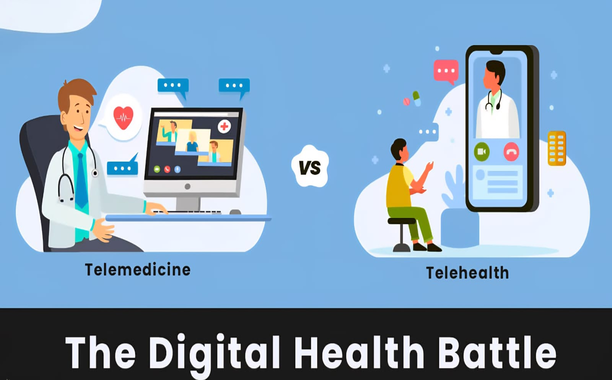
In 2024, telemedicine is strictly defined as the delivery of direct clinical services. It is the digital version of your doctor’s office. If you are interacting with a licensed professional to receive a diagnosis, a prescription, or a treatment plan, you are practicing telemedicine.
- Key Modalities: * Synchronous: Real-time video/audio visits.
- Asynchronous: “Store-and-forward” technology where you send photos of a rash or symptoms and a doctor reviews them later.
- The 2024 Context: Telemedicine is now the standard for mental health (where adoption is at 37%), chronic disease check-ins, and dermatology.
What is Telehealth? (The Digital Ecosystem)
Telehealth is the massive umbrella that covers everything health-related in the digital space. It includes telemedicine, but it also encompasses the infrastructure and non-clinical services that keep the system running.
- Non-Clinical Services: This includes administrative meetings, provider-to-provider consultations, and continuing medical education (CME) for doctors.
- The “Digital Front Door”: In 2024, we use telehealth to describe “mobile health” (mHealth) apps, health education portals, and the consolidation of your pharmacy, insurance, and records into one seamless app.
- Remote Patient Monitoring (RPM): This is the breakout star of 2024. It involves using wearables (like your Apple Watch or specialized cardiac patches) to send data to your care team without you having to pick up the phone.
The Key Differences at a Glance
Feature | Telemedicine | Telehealth |
Scope | Specific clinical care. | Broad health ecosystem. |
Interaction | Patient-to-Provider. | Patient, Provider, Admin, & Tech. |
Examples | Video visits, remote prescriptions. | mHealth apps, RPM, provider training. |
Primary Goal | Treat a specific condition. | Improve overall health literacy & access. |
Why the Distinction Matters in 2024
- The “AI Era” of Remote Care
We are now seeing Generative AI integrated into these platforms. In a telemedicine setting, AI “ambient listening” tools now act as scribes, documenting your visit so the doctor can focus on you. In the broader telehealth world, AI analyzes “Big Data” from millions of patients to predict outbreaks or improve hospital scheduling.
- Regulatory and Insurance Shifts
Insurance companies and Medicare have updated their policies for 2024. Knowing if your service is “telemedicine” (clinical) or “telehealth” (educational/monitoring) determines your co-pay and whether the service is covered.
- Remote Patient Management (RPM)
We’ve moved beyond just “monitoring” to “active management.” In 2024, your doctor might receive a notification from your wearable that your blood pressure is spiking and adjust your medication via a telemedicine follow-up—all without you leaving your couch.
The Future is Hybrid
As we move through 2024, the “virtual vs. in-person” debate is over. Healthcare is now omnichannel. Whether it’s a specialty consultation in rural Nepal or a mental health session in New York, these tools are closing the gap in healthcare disparities.