
Reading time: 06 minutes
Team PSP | 16/03/2024
The medical landscape of 2024 is no longer defined by “one-size-fits-all” treatments. We’ve entered a decade where the line between biology and engineering has effectively vanished.
At the heart of this revolution are two synergistic powerhouses: 3D Bioprinting and Organ-on-a-Chip (OoC).
While the previous few years focused on the potential of these technologies, 2024 is seeing them move into clinical reality. From the FDA’s groundbreaking inclusion of non-animal data in drug approvals to the successful implantation of complex bioprinted scaffolds, we are witnessing the birth of truly personalized medicine.
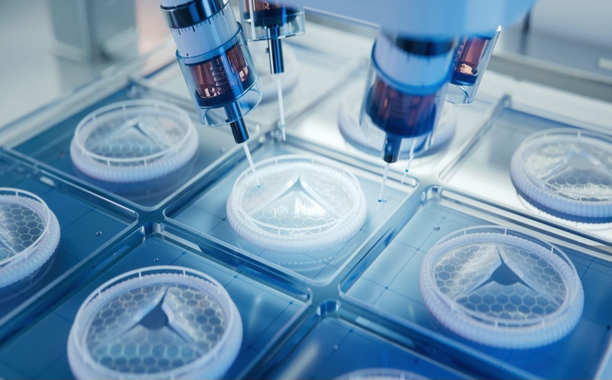
3D Bioprinting: From Digital Blueprints to Living Tissue
3D Bioprinting is the precise, layer-by-layer deposition of “bio-inks”—a cocktail of living cells, hydrogels, and growth factors—guided by high-resolution medical imaging like MRI or CT scans.
What’s New in 2024?
- Vascularization Breakthroughs: The biggest hurdle—keeping bioprinted tissues “alive” via blood flow—is being solved. New techniques in volumetric bioprinting and sacrificial inks allow us to print intricate networks of capillaries inside larger structures.
- Smart Bio-inks: We are now using “dynamic covalent hydrogels” that can change shape and respond to cellular forces, mimicking the real-life behavior of the human body’s extracellular matrix.
- Point-of-Care Printing: Some hospitals are now equipped with on-site bioprinters to create custom skin grafts for burn victims or bone scaffolds for complex orthopedic surgeries right in the operating theater.
The 2024 Bioprinting Power Players
|
Company |
Specialty |
Recent Milestone |
|
Organovo |
Clinical Tissues |
Focused on 3D-printed liver and kidney tissues for disease modeling and therapeutic repair. |
|
Cellink |
Bioprinting Ecosystem |
Their newest systems integrate AI to predict cell viability during the printing process. |
|
Aspect Biosystems |
Tissue Therapeutics |
Developing bioprinted “bio-replacement” therapies to treat metabolic diseases like Type 1 Diabetes. |
|
Cyfuse Biomedical |
Scaffold-Free Printing |
Using their “Kenzan” method to create dense, 100% cellular tissue without synthetic supports. |
|
TeVido Biodevices |
Specialized Reconstruction |
Leading the way in nipple and areola reconstruction for breast cancer survivors using a patient’s own cells. |
Organ-on-a-Chip: The Death of Animal Testing?
An Organ-on-a-Chip is a microfluidic device that mimics the physical and chemical environment of a human organ. It’s not just a petri dish; it’s a living, breathing (literally, in the case of Lung-on-a-Chip) model of human physiology.
The 2024 Regulatory Shift
The FDA’s ISTAND Pilot Program reached a historic milestone in late 2023 and early 2024 by officially accepting the first Organ-Chip data to predict drug-induced liver injury. This signals a massive move away from traditional animal models, which often fail to predict human reactions.
- Multi-Organ Systems: We are now seeing “Body-on-a-Chip” setups where a “gut” chip is linked to a “liver” chip, allowing researchers to see how a drug is absorbed and then metabolized in real-time.
- Personalized “Avatars”: By using a patient’s own stem cells (iPSCs), doctors can now test a drug on a “Liver-on-a-Chip” of that specific patient before prescribing it, ensuring zero side effects.
The Leaders in Micro-Physiological Systems
- Emulate Inc: Their Human-on-a-Chip platform is the industry standard, recently used to study the long-term effects of radiation and viral infections like COVID-19.
- AxoSim Inc: Revolutionizing neuroscience by using their “Nerve-on-a-Chip” to find cures for ALS and Alzheimer’s.
- Hesperos: Specialists in “pumpless” microfluidic systems that can sustain multiple organs for weeks of drug testing.
- Altis Biosystems: Their “RepliGut” system is the most accurate model of the human intestinal tract available today.
Conclusion: A Scaffold for the Future
The convergence of bioprinting and OoC is creating a world where we no longer wait for a donor; we print the solution. In 2024, the focus has shifted from “Can we build a tissue?” to “How fast can we get this to the patient?” With the FDA now backing these digital-biological hybrids, the future of artificial organs isn’t just a science fiction dream—it’s the new standard of care.