
Reading time: 05 minutes
Team PSP | 25/02/2022
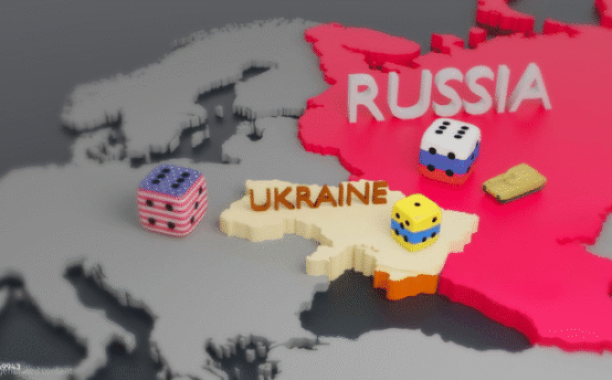
The long-simmering fears of a full-scale Russian invasion of Ukraine have turned into a grim reality. Following the February 24th offensive, the world is now grappling with the largest ground war in Europe since 1945. What began with President Putin’s recognition of Donetsk and Luhansk as independent states has rapidly evolved into a geopolitical earthquake that is shattering the post-COVID recovery.
Beyond the humanitarian tragedy, this conflict is dismantling global trade links and sending shockwaves through financial markets. With Western nations retaliating with unprecedented sanctions—including the removal of Russian banks from the SWIFT network—the global economy is now staring down the barrel of stagflation.
Energy Crisis: Oil and Gas Under Fire
Russia is a titan in the energy sector, and the invasion has lit a fuse under global prices.
- Crude Oil Surge: As the world’s third-largest producer, Russia’s isolation has sent Brent crude prices screaming toward $130/bbl, a level not seen since 2008. Analysts warn that if supplies remain tight, $150/bbl is no longer a “worst-case” scenario but a looming probability.
- Natural Gas Dependency: Europe relies on Russia for 40% of its natural gas. Germany’s decision to halt the Nord Stream 2 pipeline is a massive strategic shift, but it leaves the continent scrambling for expensive LNG alternatives as the “clean energy transition” hits a wall of cold reality.
The Global Breadbasket: Imminent Food Inflation
This conflict isn’t just about fuel; it’s about the food on our tables. Russia and Ukraine together account for nearly 29% of global wheat exports.
- Bread Shortages: Known as the “Breadbasket of Europe,” Ukraine’s planting and harvesting seasons are now under direct threat from military operations.
- The Chain Reaction: Disruptions in the Black Sea region are already spiking prices for corn, barley, and sunflower oil. For nations in the Middle East and Africa that rely on these exports, the threat of bread riots and instability is very real.
- Fertilizer Costs: Since natural gas is a key component for fertilizer production, skyrocketing energy prices are making it more expensive for farmers everywhere to grow crops.
Metal Scarcity and the Auto Industry
If you thought the microchip shortage was bad, the war is now targeting the metals under the hood.
- Palladium & Platinum: Russia is the world’s top exporter of palladium, essential for catalytic converters.
- Aluminum & Steel: With Rusal (Russia) and Ukrainian steel mills facing shutdowns or sanctions, prices for industrial metals have hit record highs.
- Manufacturing Stalls: Major brands like Volkswagen and Toyota are already pausing operations in Russia, while supply chain bottlenecks threaten vehicle availability globally.
The Silent Front: Cyber Warfare
Cyberattacks are no longer “hypothetical”—they are a core component of Russia’s hybrid warfare.
- Global Spillover: Authorities are on high alert for a repeat of the 2017 NotPetya attack, which caused $10 billion in damage worldwide.
- Infrastructure Threats: Intelligence agencies in the US and UK (CISA and NCSC) have warned that Russian-linked groups may target satellite communications, power grids, and financial systems as retaliation for Western sanctions.
Market Volatility and Investor Flight
The stock market’s reaction has been swift and merciless.
- Sell-offs: Major indices like the S&P 500 and Sensex have seen billions in value wiped out in single days.
- Safe Havens: Investors are fleeing to the “Big Three” of crisis assets: the US Dollar, Gold, and Government Bonds.
- Crypto Slump: Once touted as a hedge against inflation, major cryptocurrencies have instead mirrored the decline in equities, losing significant value as the crisis intensified.
Conclusion: The Road Ahead
As we navigate the rest of 2022, the risk of stagflation—high inflation combined with stagnant growth—is the greatest threat to our global stability. With the Federal Reserve signaling interest rate hikes to combat 40-year high inflation, the added pressure of a war-driven energy shock could push the economy into a recession.
The coming months will test the resilience of our supply chains and the unity of the global financial system. The “new normal” of 2022 is turning out to be even more complex than the pandemic years.