
Reading time: 05 minutes
Team PSP | 08/08/2025
The landscape of Indian healthcare is undergoing a seismic shift. For decades, surgery meant long incisions, significant blood loss, and weeks of recovery. Today, a beam of light is changing that narrative. Medical lasers—once a staple of high-end urban hospitals—are rapidly becoming the backbone of a precision-led medical revolution across Bharat.
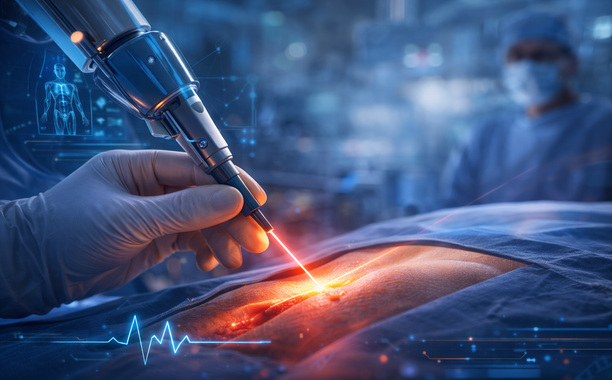
The Precision Revolution
In 2026, the adoption of laser technology in India has moved beyond mere trend-following to becoming a clinical standard. The primary driver is the demand for Minimally Invasive Surgeries (MIS). Unlike traditional blades, lasers offer sub-micron accuracy, allowing surgeons to target diseased tissue while leaving surrounding healthy cells untouched.
From the bustling corridors of AIIMS to emerging specialty clinics in Tier-2 cities, lasers are being deployed across several critical fronts:
- Ophthalmology: Femtosecond and excimer lasers have made LASIK and cataract surgeries “walk-in, walk-out” procedures.
- Urology & Oncology: High-power lasers are now used for “bloodless” surgeries, such as treating enlarged prostates (BPH) and vaporizing tumors with minimal trauma.
- Dermatology & Aesthetics: With a growing middle class, the demand for non-invasive skin rejuvenation and scar revision has skyrocketed, making India a global hub for medical tourism.
Smart Tech: AI and Robotics
The “Future” of medical lasers in India is increasingly digital. We are seeing a convergence of Artificial Intelligence (AI) and Robotic-Assisted Surgery. AI-driven platforms can now calibrate laser intensity in real-time, adjusting for tissue density and blood flow. This “smart-shaping” of the beam reduces the risk of accidental burns and ensures uniform healing.
Moreover, the integration of lasers with robotic systems allows for “telerobotics.” This means a specialist in Mumbai could potentially guide a laser procedure in a rural clinic, bridging the massive gap in healthcare accessibility between urban and rural India.
Challenges and the Path Ahead
Despite the optimism, hurdles remain. The high capital cost of advanced laser systems—often ranging from ₹10 lakh to over ₹1 crore—can be prohibitive for smaller facilities. However, with the government’s push for local manufacturing under “Make in India” and the rise of the MedTech sector (projected to hit $50 billion by 2026), these costs are expected to stabilize.
The shift toward outpatient care and shorter hospital stays is not just a win for patient comfort; it is an economic necessity for a country with a high patient-to-bed ratio.
Conclusion
Medical lasers are no longer the “future”—they are the present. As technology becomes more portable and AI-integrated, the surgical blade may soon find its place in history books, replaced by the silent, sterile, and life-saving power of light.
Frequently Asked Questions (FAQs)
Q1. Is laser surgery safer than traditional surgery?
Generally, yes. Laser surgery is more precise, resulting in smaller incisions, less bleeding, and a significantly lower risk of post-operative infection compared to open surgery.
Q2. Are laser treatments in India covered by insurance?
It depends on the intent. Therapeutic laser procedures (like those for cataracts, kidney stones, or glaucoma) are often covered. However, purely aesthetic procedures (like tattoo removal or skin tightening) are usually not.
Q3. Does laser therapy hurt?
Most procedures are performed under local anesthesia or use cooling technology to numb the area. You might feel a mild warm or “snapping” sensation, but intense pain is rare.
Q4. How long is the recovery time?
One of the biggest advantages of lasers is the speed of recovery. Many patients return to work within 24–48 hours, though some aggressive skin resurfacing treatments may require a few days of downtime.
Q5. Can lasers be used for all skin types?
Advancements in technology, such as Nd:YAG and Diode lasers, have made it safe to treat a wide variety of Indian skin tones. Always consult a specialist to ensure the specific wavelength is safe for your skin type.
Q6. Are there any side effects?
Temporary redness, swelling, or mild sensitivity are common. Rare side effects include temporary pigmentation changes, but these are usually avoided by choosing an experienced and certified practitioner.