
Reading time: 05 minutes
Team PSP | 10/05/2025
In 2025, the pharmaceutical industry is undergoing a profound “chemical detox.” For decades, the sector was defined by a high-waste reality: for every kilogram of drug produced, nearly 100 kilograms of waste were often left behind. But as we move through mid-decade, Green Chemistry has shifted from a corporate social responsibility (CSR) buzzword to a core competitive advantage.
With over 100,000 tonnes of pharmaceutical products consumed annually and increasing reports of Active Pharmaceutical Ingredients (APIs) appearing in our groundwater, the industry has reached a tipping point. Today, the most innovative companies are proving that “going green” isn’t just about the planet—it’s about the bottom line.
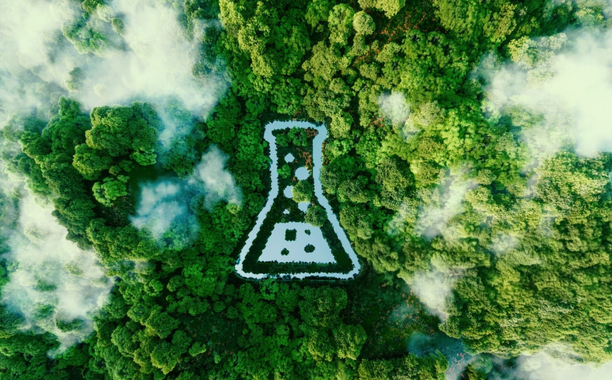
Why the “Green Shift” is Accelerating in 2025
The pharmaceutical environmental footprint is being tackled through a design philosophy that prevents pollution at the molecular level. This shift is driven by three major 2025 realities:
- Supply Chain Resilience (Atmanirbhar Bharat): In India, initiatives like the Production Linked Incentive (PLI) Scheme have encouraged the domestic manufacturing of APIs. By using green chemistry, manufacturers are reducing their dependence on imported, hazardous solvents and creating more efficient, “Made in India” synthetic routes.
- The AI Optimization Boom: We are now using advanced Machine Learning to predict reaction outcomes. Instead of “trial and error” in a lab that wastes liters of chemicals, AI simulates thousands of “green” pathways to find the one with the highest Atom Economy (ensuring maximum raw material ends up in the final drug).
- Strict Global Regulation: Regulations like the EU’s REACH and the FDA’s Green Chemistry Guidance have made sustainability a prerequisite for market entry. In 2025, if your process isn’t green, your regulatory approval might be gray.
The 2025 Green Tech Toolkit
Pharmaceutical giants are ditching traditional “batch” processing for a more modern, sustainable toolkit:
- Biocatalysis: Replacing toxic heavy-metal catalysts with natural enzymes to “grow” complex molecules.
- Continuous Flow Chemistry: Moving away from giant, energy-gulping vats to streamlined, “always-on” micro-reactors that reduce waste by up to 90%.
- Supercritical CO₂: Using pressurized CO₂ as a solvent instead of hazardous organic chemicals; it’s non-toxic, recyclable, and leaves zero residue.
- Microwave-Assisted Synthesis: Using precise electromagnetic energy to heat reactions instantly, cutting energy consumption by half.
The Economic & Strategic Payoff
While the R&D transition carries an initial cost, the long-term benefits in 2025 are clear:
- Cost Efficiency: Using less solvent and achieving higher yields means lower raw material and disposal costs.
- ESG Leadership: Investors in 2025 prioritize companies with high Environmental, Social, and Governance (ESG) scores. Green pharma is simply seen as a lower-risk investment.
Brand Loyalty: In an era of “conscious consumption,” patients and healthcare providers are choosing brands that can prove their “carbon-neutral” drug manufacturing goals.
Frequently Asked Questions (FAQs)
Q1. Does "Green Chemistry" make my medicine more expensive?
Initially, research costs are higher, but in the long run, it actually lowers prices. By making manufacturing more efficient and reducing waste-disposal fees, companies can produce generic and essential medicines more affordably.
Q2. Are "Green" drugs as effective as traditional ones?
Yes. Green chemistry changes how the medicine is made, not the molecule itself. The final Active Pharmaceutical Ingredient (API) is chemically identical to the version made through traditional methods—it’s just produced with a smaller environmental footprint.
Q3. What is "Atom Economy," and why does it matter?
Atom Economy is a measure of how much of your starting material actually ends up in the final product. In 2025, high atom economy is the gold standard; it means less chemical waste is going into our landfills and waterways.
Q4. How is the Indian government supporting this transition?
Through schemes like the PLI (Production Linked Incentive) and the National Digital Health Mission, the government is incentivizing the domestic production of APIs using modern, sustainable technologies to ensure India remains the “Pharmacy of the World.”
Q5. Can AI really help with environmental sustainability in pharma?
Absolutely. In 2025, AI is used to design “closed-loop” systems where waste from one reaction becomes the fuel or feedstock for another. This Circular Economy model is only possible because of AI’s ability to process complex chemical datasets.