
Reading time: 04 minutes
Team PSP | 02/06/2025
It is 2025, and the medical landscape in India has reached a historic milestone. What once felt like science fiction—a surgeon in Delhi operating on a patient 500 kilometers away in Lucknow—is now a documented reality. Surgical robotics has moved from the “early adopter” phase in elite metros to becoming a vital pillar of the national healthcare strategy.
With over 100 indigenous robotic installations and a market projected to hit nearly $4 billion by 2031, India is no longer just a consumer of global tech; we are an innovator.
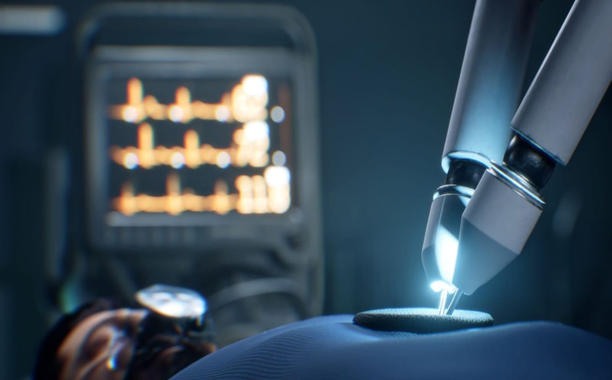
The “Telesurgery” Breakthrough
The biggest story of 2025 has been the successful deployment of Robotic Telesurgery.
- SSI Mantra’s Milestone: In January 2025, India’s first indigenous robotic system, the SSI Mantra, successfully performed cardiac surgeries over a distance of 286 km.
- Democratizing Care: By September 2025, history was made again in Andhra Pradesh with a cholecystectomy performed remotely. These breakthroughs are bridging the urban-rural divide, bringing “Apollo-level” precision to Tier-3 cities like Vizianagaram.
Key Applications & Next-Gen Systems
The “Big Three” of Indian robotics—Intuitive (Da Vinci), SS Innovations (Mantra), and Meril (CUVIS/Mizzo)—are now competing to make surgery safer across every specialty:
- Orthopedics & Joint Care: Meril’s CUVIS Joint has become a staple in Indian bone-care, offering sub-millimeter precision in knee replacements. In late 2025, Meril also launched the Mizzo Endo 4000, a next-gen platform designed for even more complex endo-surgical maneuvers.
- Oncology: Robotic-assisted tumor removal is now the gold standard for prostate, lung, and colorectal cancers. With readmission rates as low as 1.9%, robotic precision ensures that cancer clearance is higher and recovery is faster.
- The “SSI MantraM” Unit: Launched at the 2025 Global Robotic Surgery Conference, this Mobile Tele-Surgical Unit is a first-of-its-kind clinic-on-wheels, bringing world-class surgical robotics to underserved regions via high-speed satellite connectivity.
Why India is Leading the Global Curve
- Indigenous Innovation: The SSI Mantra has passed the 100-installation mark globally. Being significantly more cost-effective than international systems, it is democratizing access to robotic care in public institutions like KGMU Lucknow and AIIMS Raipur.
- Medical Tourism 2.0: India is now the global hub for affordable robotic care. Patients from over 15 countries—including the UK, US, and Middle East—travel here for robotic procedures that cost a fraction of what they do in the West, without compromising on clinical outcomes.
- Human-AI Synergy: 2025 has seen a 25% reduction in operative times thanks to AI-driven real-time data analytics and haptic feedback, which “gives back” the sense of touch to the surgeon’s console.
Frequently Asked Questions (FAQs)
Q1. Is "Remote Surgery" (Telesurgery) safe if the internet lags?
In 2025, we use ultra-low latency 5G and satellite links. Systems like the SSI Mantra feature “Bone Motion Monitors” and fail-safes that automatically halt the robot if even the slightest delay or patient movement is detected, ensuring 100% safety.
Q2. How much does a robotic surgery cost in India today?
While costs vary, indigenous systems have brought prices down significantly. In some public-private partnerships (PPP), like at KGMU, procedures have even been offered for free or at highly subsidized rates to ensure everyone has access to the best tech.
Q3. Does the robot perform the surgery automatically?
No. Even with AI-assisted “auto-suturing” trends, the surgeon is always in control. The robot acts as a high-precision extension of the surgeon’s hands, filtering out tremors and providing 3D-HD views that the human eye alone cannot see.
Q4. Where can I get trained as a robotic surgeon in India?
India now has world-class facilities like IRCAD India (Indore) and the Vattikuti Foundation. Institutions like Aster Health Academy also offer specialized “Da Vinci” tracks. By late 2025, over 800 surgeons in India are officially certified in robotic techniques.
Q5. What is the main advantage of the new indigenous systems like Mizzo or Mantra?
Beyond affordability, these systems are modular. Unlike older, bulky systems, the new Indian robots can be customized for specific specialties (like the Mizzo Flex SA for gynecology), making them easier to install in existing, smaller operating theaters.